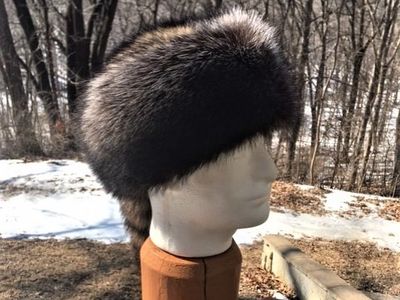
Dive Into Our Knowledge Center
Step inside our center for trusted fur pelt information, expert guidance, and craftsmanship.
Knowledge Center
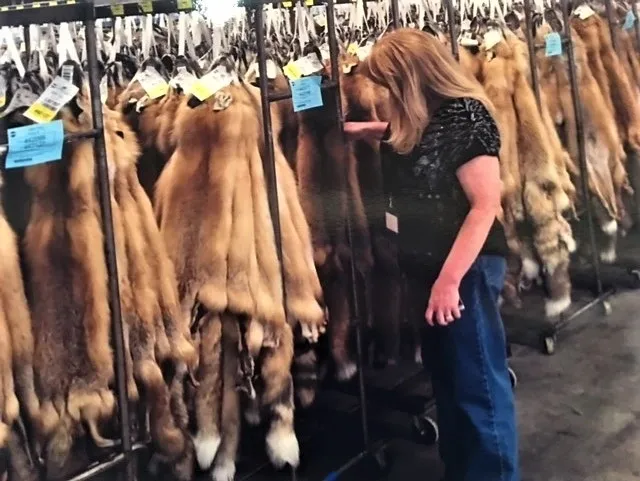
If you are in the market for a fur pelt or fur garment, having some knowledge of furs can be very beneficial in making a good, informed purchase.
Site Content
Fur Terminology Explained
When shopping for a fur pelt, it's hard to know what you are really purchasing when fur industry standards are not used to describe the pelt. In this section, we will dive in to the standards in an effort to help make you a more informed buyer of fur pelts.
Pelt Size Standards Explained
Have you ever wondered what an XXL or XXXL or a “huge” pelt really means? In this section, we'll discuss the different sizes of some of the most common fur pelts, and I'll leave a link to where you can find the industry standard for all the sizes of different fur bearers.
Let's Talk About Damage and How It's Defined by The Industry
In this section, we'll talk about damaged pelts and the standard used by the industry.
The Different Types of Tanning
There are several different types of tanning. In this section, we will discuss the Pro's and Con's of each type.
How a Quality Fur Hat is Made
In this section, I will walk you through the steps (with pictures) of making a fur hat that is both durable and beautiful.
Fur Terminology Explained
Speaking the Same Language is Important
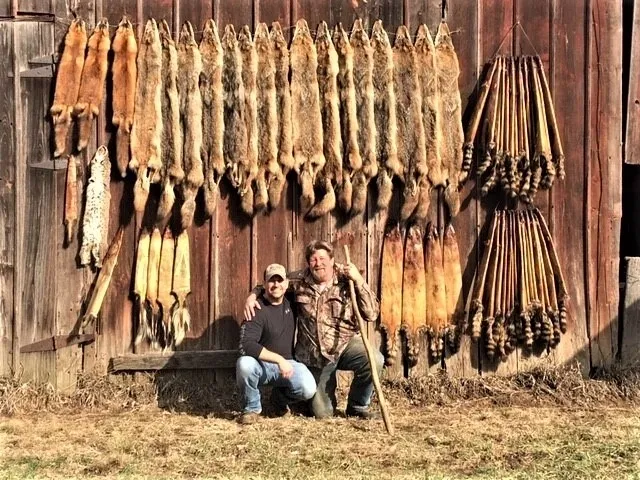
Can you imagine how confusing it would be if every country that buys fur lived by a different standard and spoke about fur in different terms? To eliminate that confusion, the International Fur Community adopted a set of standards for each species of fur bearer. That way, a fur buyer from China could speak with someone in Canada about some furs from Alaska or Finland and everyone knew exactly what they are talking about.
The goal of this section is to help educate you, a potential buyer of fur pelts, on some of the standards and what they mean in laymen terms. At the very least, I hope you gain enough knowledge to ask the seller questions to better understand the quality of the pelts you are buying.
Learn More
At the very least, I hope you gain enough knowledge to ask the seller questions to better understand the quality and size of the pelts you are buying.
Pelt Size Standards
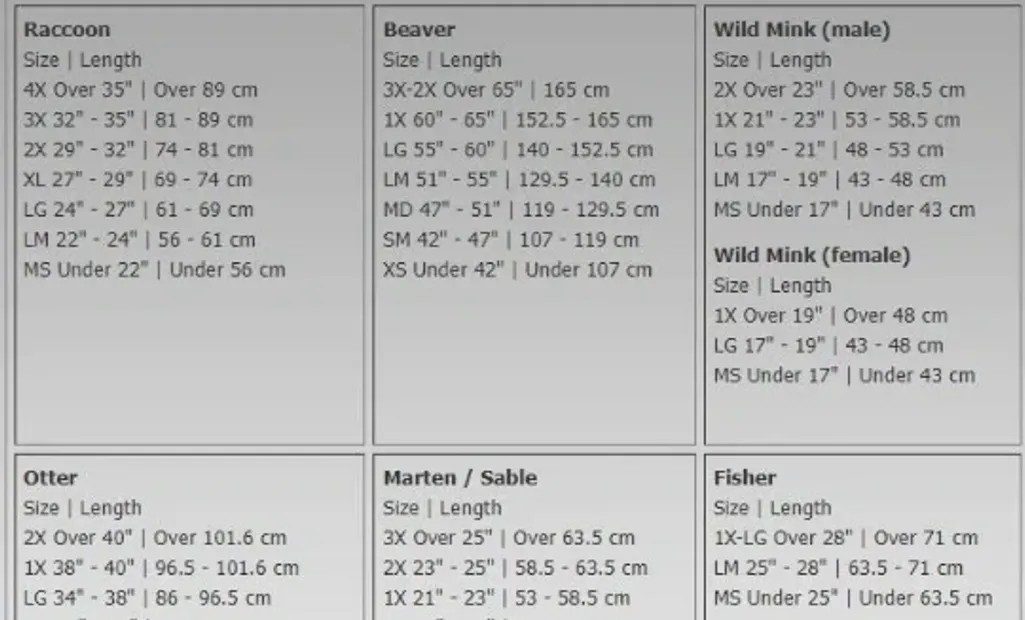
Does the size standard include the tail?
The short answer to that question is NO. The fur industry measures pelts from the tip of the nose to the base of the tail. The base of the tail is that point where the back squares off and the tail begins. Sometimes the base is longer on one side of the tail than the other side. In that case, the shorter side is used to calculate the size of the pelt.
For Example: You see a listing for a raccoon pelt that is 39 inches long from the nose to the tip of the tail. If you look at the chart above, you would see that this pelt is a 4X. In reality, this pelt measures 27½ inches to the base of the tail and would be graded an XL. This is important (or should be) to know and understand because there is a big price difference between a 4X and a XL.
The only exception I am aware of is how a beaver is measured. Beaver are measured both length plus the width. The sum of the two measurements is the size.
For Example: You have a beaver that is 30" long + 23" wide = 53 inches. If we look at the chart above, we see that beaver size is LM.
Potential questions to ask a seller would be:
- How long is the pelt from the nose to the base of the tail? (check it against the chart)
The chart in the picture is from the Fur Harvesters Auction website.
Learn More
The fur industry measures pelts from the tip of the nose to the base of the tail. It does not include the length of the tail.
Damage and How It's Defined by The Industry
So What is Damage in a Fur Pelt?
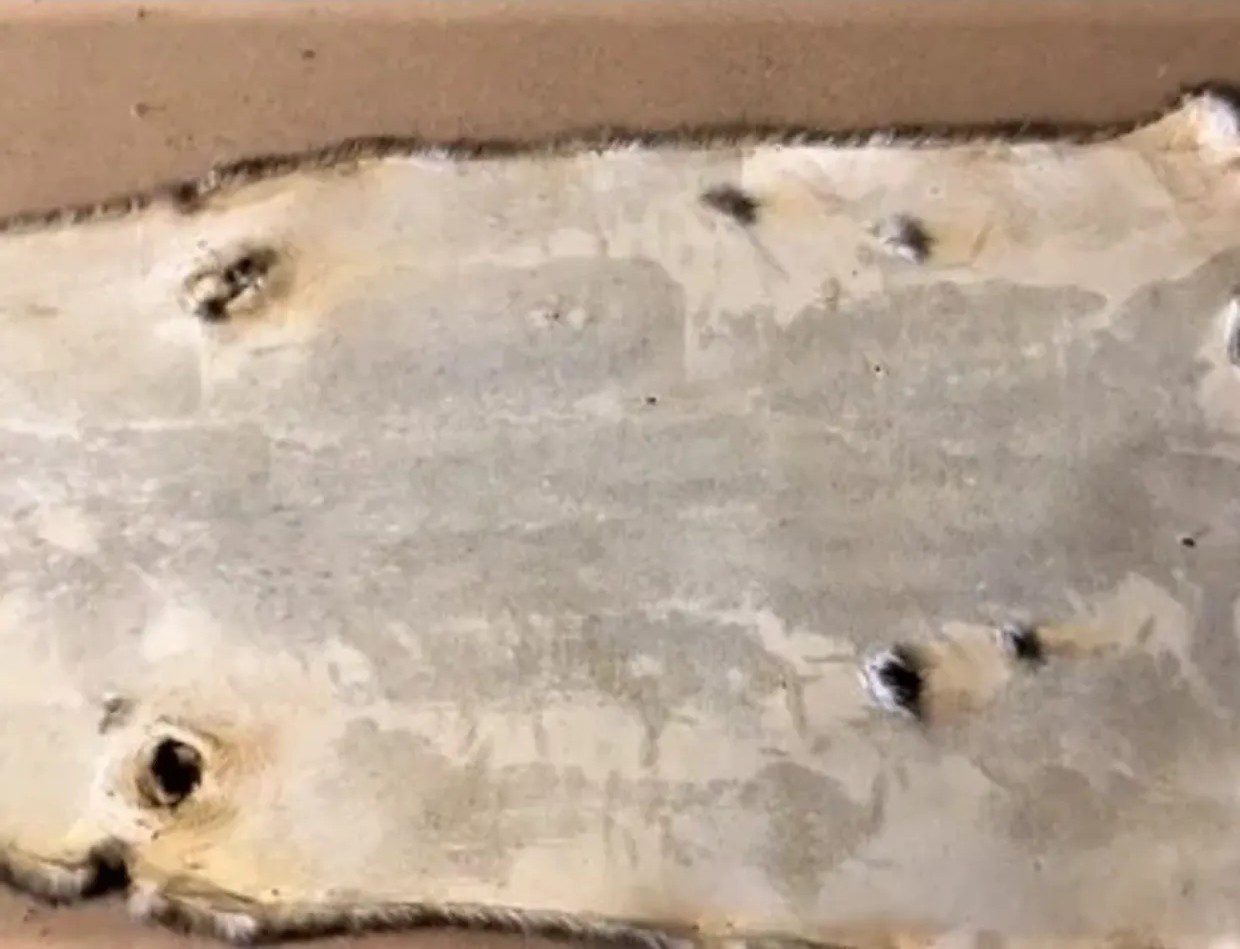
Even though there is a chart that describes the different kinds of damage, it's important to keep in mind that damage can be very subjective. What is slight damage to one fur grader might be damaged with large imperfections to another grader. I'm sure there is less variation among the professional graders, and a little more variation among those of us that don't see 10s of thousands of pelts every year. That's why when buying pelts, you may want to ask some questions of the seller that advertises a pelt that is slight damaged.
When grading fur for the International Fur Auction, there are typically two types of damage in a pelt. There is damage to the fur itself, damage to the leather, or a combination of both. However, when grading tanned (also known as dressed) fur there becomes another dimension of damage and that's tannery damage. In the picture above, this otter has good prime hair, but eight (8) holes in the leather. I would consider this one a Good Quality with Large Imperfection. On the other hand, you could have a pelt with perfect leather, but the hair is mangy. I would consider that one as Extensive Damage. The otter in the image above shows a large dark area in the leather. This is tanning damage. When this otter pelt was tanned, it was shaved way too thin. This makes the leather very weak and not suitable for sewing. In a case like this, the pelt should be graded as very bad damage and be severally discounted.
What questions to ask the seller depends on how you want to use the pelt. If it's for a wall hanger, you may get by with some small holes in the leather, but good quality hair is essential. If it's for a hat or gloves, you may ask the seller to send you some pictures of the damage. Of course, you want good hair, and depending on where the leather is damaged you might be ok. Damage in the belly area of a raccoon isn't usually a problem for garments. However, other species of fur bearers like mink, fox, otter, coyote, beaver, etc. could create unusable fur and that would be a waste.
Bottom line on damage is this. If there are no pictures that describe the damage, ask the seller for some, and make sure to look for tanning damage. Quality pelts are not cheap and as a buyer you deserve full disclosure on what you are purchasing.
Learn More
What is slight damage to one fur grader might be damaged with large imperfections to another grader. That's why when buying pelts, you may want to ask some questions of the seller that advertises a pelt that is slight damaged.
The Different Types of Tanning
This Can Get Confusing!
I'll be the first to admit that I'm not an expert on tanning hides. However, over the years I have tanned enough of my own hides to know that I simply can't do it myself near as good as a professional tannery can. With that said, the focus of this section will be on some basic information to help you know what questions to ask when you are shopping for a pelt.
Three Key Types of Tanning to Make Leather
- Chrome Tanning - This is the most common and economical method for making leather.
- Vegetable Tanning - This method is the oldest. It uses the tannin from tree bark, nuts, and shrubs to tan the leather. It is a very lengthy process that produces beautiful and often high-end leather.
- Chrome-Free Tanning - This would include brain tanning and alum tanning.
- Brain Tanning is an ancient method that uses the brain of the animal to tan its hide.
- Alum Tanning is just as the name implies… it uses alum to do the tanning. This is a common method in commercial tanneries that specialize in garment quality fur pelts.
What is the Best Method for Garment Quality Pelts?
The answer to that is most likely debatable, but I would have a preference to the alum simply because that is what my tannery uses, and I love the quality of their work!
Some Red Flags to Watch For...
Pelts that have been tanned at a professional commercial tannery WILL NOT have any animal odor or grease present. They WILL have a pleasant leather smell and the hair will be soft, silky, and clean. If the listing says something like, “this skunk pelt has a slight skunk smell, but you can expect that”, or “the pelt is slightly greasy" it's time to ask some questions. Reading reviews is also a good way to learn about the tanning quality.
Learn More
Pelts that have been tanned at a professional commercial tannery WILL NOT have any animal odor or grease present. They WILL have a pleasant leather smell and the hair will be soft, silky and clean. If the listing says something like, "this skunk pelt has a slight skunk smell, but you can expect that", or "the pelt is slightly greasy" it's time to ask some questions.
How a Fur Hat is Made
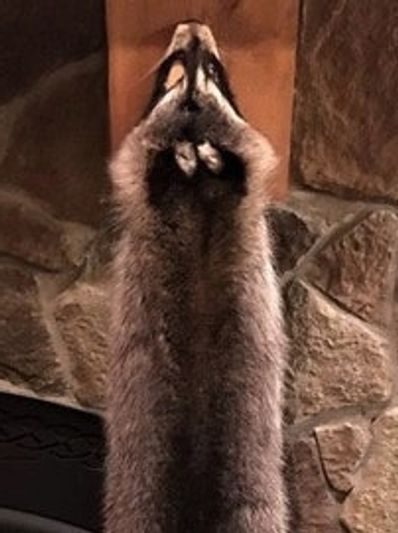
Start with a Quality Pelt
I asked an old apple orchard farmer one time why his cider was so good. He said, “most people use their seconds to make cider. I don't do that, I use my best apples. The way I figure it, trash in…trash out”. That philosophy certainly holds true when making a quality garment. Start with a good quality pelt!
How a Fur Hat is Made
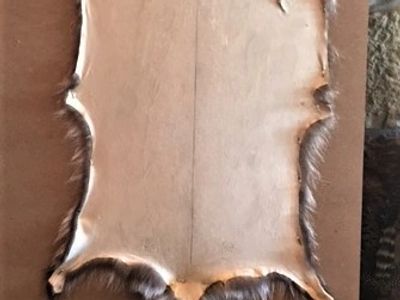
Stretch and Nail the Pelt
SAGA Furs of Finland calls this step “stretching and nailing”. I have also heard it referred too as “blocking” the pelt. Whatever you choose to call it, this step is always done and never skipped.
How a Fur Hat is Made
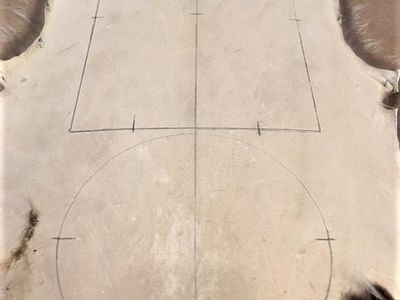
Trace the Pattern on the Skin.
The next step is to trace the pattern on the leather side on the skin.
How a Fur Hat is Made
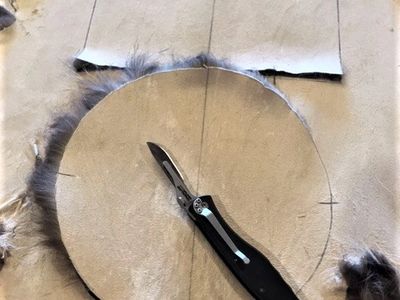
Cut the Pieces Out.
When cutting fur, always cut on the leather side with a razor knife. Only cut deep enough to cut the leather. We don't want to cut the hair.
How a Fur Hat is Made
Begin Sewing
Sew the sidebands together. I tie the knots with a double square knot then glue the knot just to make sure it doesn't come untied.
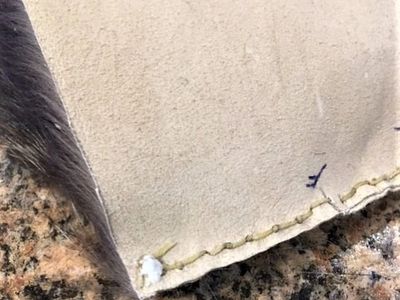
How a Fur Hat is Made
Sewing the Top.
Sew the top to the sidebands. Once again, I tie the knots with a double square knot then glue the knot just to make sure it doesn't come untied.
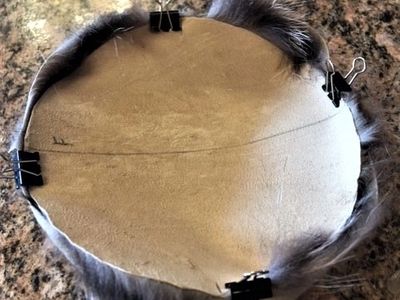
How a Fur Hat is Made
Sew on the Tail…
Sew the tail to the back of the hat. Once again, tie and glue the knots.
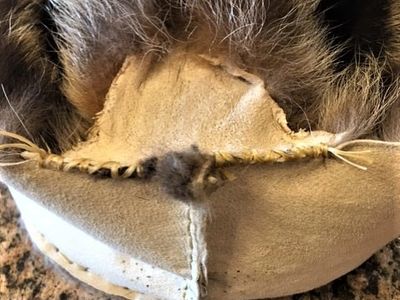
How a Fur Hat is Made
Make the Liner.
Using the same hat pattern, trace it out on your liner material and sew it together.
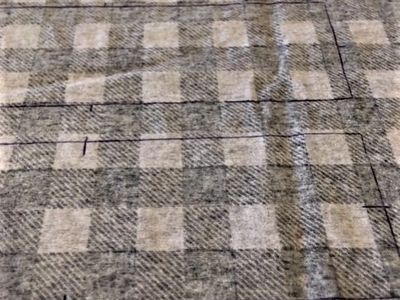
How a Fur Hat is Made
Sew the Liner.
Sew the liner in to the hat. Once again, tie and glue the knots.
How a Fur Hat is Made
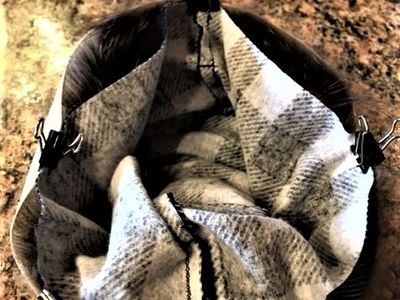
Turn the Hat Inside Out.
You should stop sewing the liner in the hat at each side of the tail. This will give you a small opening to pull the hat through to finish it.
How a Fur Hat is Made
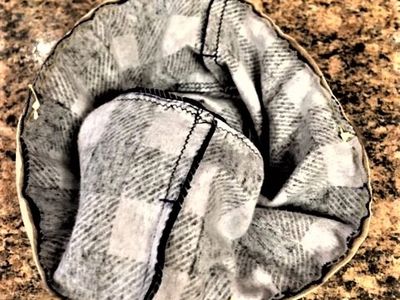
Adjust the Liner
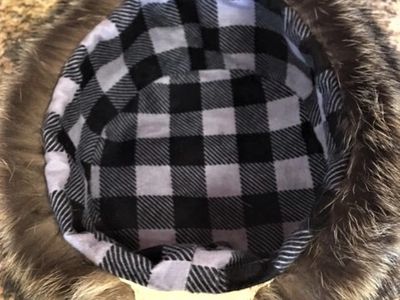
Push the liner in to the hat so it lays straight inside the hat.
How a Fur Hat is Made
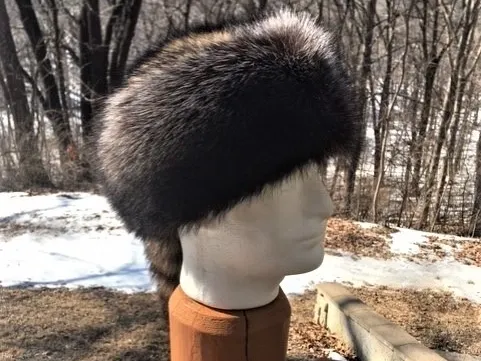
VOILA!!!
A Beautiful - High Quality - Raccoon Skin Hat!